
Live 24/7 dispatch for Glenfair — the apartment-dense 1960s-80s neighborhood near SE 148th & Glisan, between Hazelwood and the Gresham line. Built for shared multifamily stacks, polybutylene, and ground-floor slab leaks. Live dispatch around the clock.
Live 24/7 dispatch. Stocked trucks. Most repairs first-visit complete.
Why plumbing fails the way it does in 97233.
Glenfair is one of Portland's smallest neighborhoods — roughly a third of a square mile of far-East Portland tucked between NE Glisan Street, 148th Avenue, SE Stark Street, and 161st, with the Gresham city line at its eastern edge and Hazelwood, Wilkes, and Centennial wrapped around the other sides. It grew up in the post-war and county-era building boom, the bulk of it going in across the 1960s, 1970s, and 1980s when this stretch of unincorporated Multnomah County filled fast with ranch subdivisions and, more than almost anywhere else east of 122nd, block after block of apartment complexes and fourplexes. Today roughly seven in ten Glenfair households rent, which shapes nearly every emergency call we run here.
What's behind the walls in Glenfair. This is multifamily country. The garden apartments, two- and three-story walk-ups, and dense fourplexes near SE 148th and E Burnside were plumbed to the standards of their build decade, which means shared waste stacks and shared supply manifolds serving stacked units. When the cast-iron or galvanized branch behind that shared stack fails, it doesn't flood one bathroom — it backs up every unit tied to that line, often starting with the lowest ground-floor fixture. A single corroded stack tee can put four kitchens out of service at once.
Polybutylene is the second defining issue. A large share of Glenfair's 1978-1995 construction was plumbed with gray polybutylene (PB) supply line — the material that was cheap and popular in exactly the years Glenfair was building out fastest. PB doesn't fail at the pipe wall the way galvanized does; it fails at the acetal plastic insert fittings, which grow brittle and split, and the pipe itself can crack from chlorine exposure over decades on Portland Water Bureau supply. A PB failure is sudden, not gradual — the first sign is usually a flood, not a drip. Where we find active PB in a unit, a transition to PEX or copper is the durable fix.
Slab leaks round out the pattern. Glenfair's single-story ranch homes and ground-floor apartment units were frequently built slab-on-grade, with copper or PB supply running through or beneath the concrete. A pinhole or fitting failure inside the slab shows up as a warm spot on the floor, an unexplained spike in the water bill, or the sound of running water with every fixture closed. These need electronic leak detection and pressure isolation to locate before anyone opens concrete — random jackhammering of a Glenfair slab is the wrong first move.
What this means for an emergency call in Glenfair. We run this corridor constantly and we know the building types. Our trucks carry PB-to-PEX transition fittings, dielectric unions for mixed-material repairs, no-hub couplings for cast-iron stack work, branch shutoff and isolation parts for keeping the rest of a building in water, and acoustic and thermal leak-location gear for slab work. We are not learning your fourplex's plumbing at the curb.
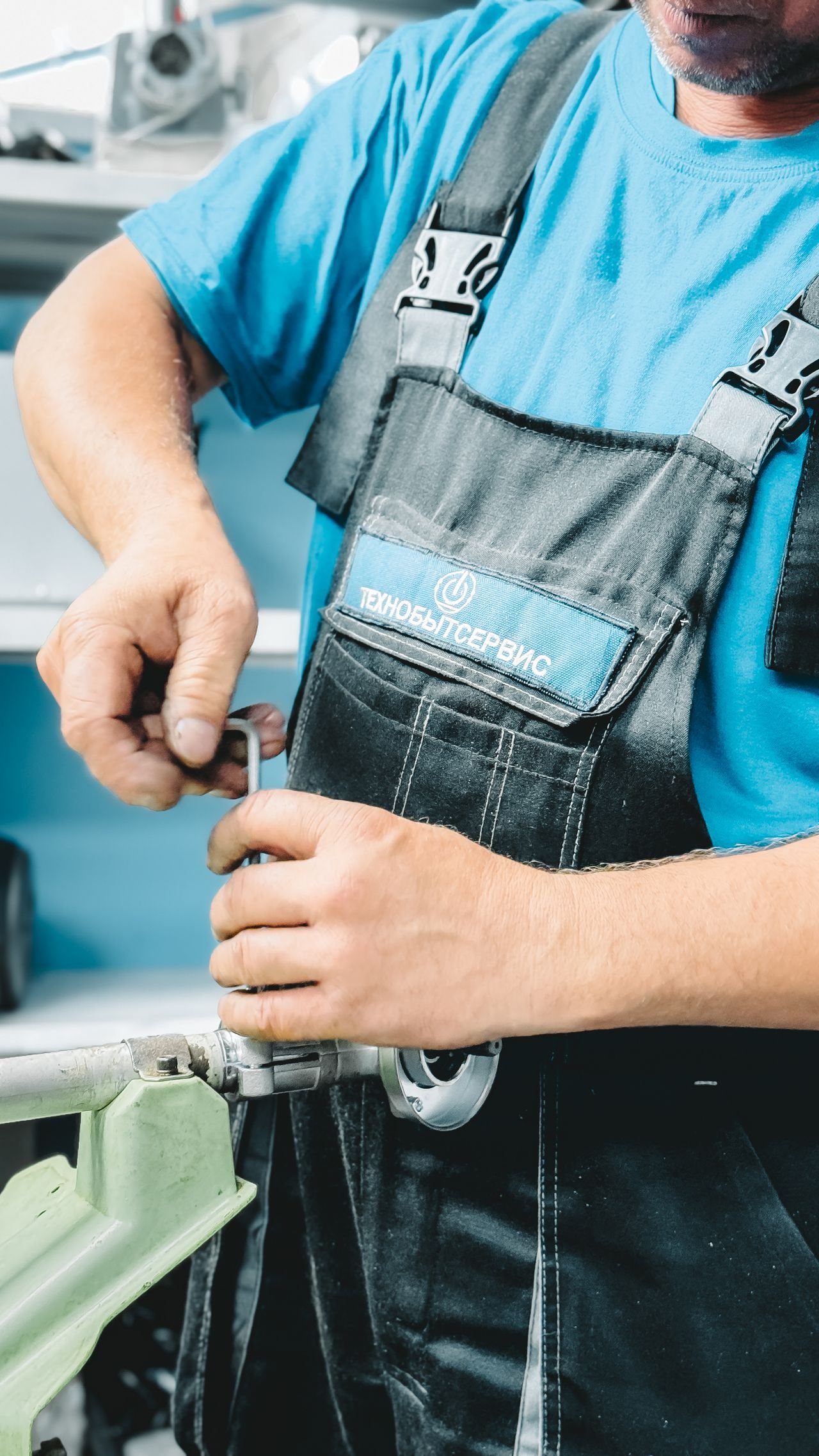
A leak in a detached house is one owner's problem. A leak in a Glenfair fourplex or garden complex is a shared-system problem, and that changes everything about how the call has to be handled. When a supply manifold or a waste stack serving stacked units lets go, the water doesn't respect unit boundaries — a second-floor burst lands in the ceiling of the unit below, and a clogged main stack backs sewage into the lowest ground-floor fixture across the whole branch. The first move is almost always to find and close the right shutoff so the building isn't choosing between one flooded unit and no water for everyone.
We isolate at the branch or unit shutoff wherever the building plumbing allows, so neighbors keep service while we work the failure. Then we scope the shared line — camera the stack, pressure-test the manifold — before recommending a repair, because on a 50-year-old shared system the visible leak is often a symptom of a longer run that's due. That diagnostic discipline is what keeps a Glenfair apartment owner from paying for the same emergency twice in one winter.
Landlords and property managers: we keep a certificate of insurance (COI) on file and provide written, photo-documented cause-of-loss reports for every multifamily call — the paperwork your insurer and your tenants will both ask for. Sewer service in Glenfair is administered by the Portland Bureau of Environmental Services (BES); where a camera scope shows backflow exposure on a shared lateral, we can spec a backwater valve as part of the repair. Call once and we coordinate the rest.
Call (971) 293-4200Live dispatch around the clock. Stocked trucks. First-visit completion on most calls.
Burst Pipe Repair in Glenfair. Polybutylene insert-fitting splits, cast-iron and galvanized branch failures on shared stacks, copper pinhole pitting on soft Bull Run water, and PEX freeze splits during winter cold snaps. We carry repair couplings, PB-to-PEX transition fittings, and full repipe materials.
Drain Cleaning in Glenfair. Single-unit branch clogs and shared main-stack backups in apartments and fourplexes. Cable machines for branch lines, hydro jetting for grease and scale in shared kitchen stacks, camera scope before any main-line repair recommendation.
Water Heater Repair & Replacement in Glenfair. Tank and tankless, including the hallway- and utility-closet installs common in ground-floor and slab units with no floor drain. 40- and 50-gallon Bradford White, AO Smith, and Rheem stocked for same-day swap. Portland permit pulled on every replacement.
Sewer Line Repair in Glenfair. Shared lateral backups, root and grease blockage, and BES-administered sewer work. Trenchless cured-in-place lining where access allows, spot dig where it doesn't, and backwater-valve installs where the scope shows backflow risk.
Leak Detection in Glenfair. Acoustic, thermal imaging, and pressure-isolation testing to pinpoint slab leaks under ground-floor and ranch units — locating the failure before any concrete is opened.
Anywhere in 97233 — same upfront estimate.
Real dispatcher, no IVR. We triage the emergency on the call and walk you through the right shutoff — unit, branch, or building — before water reaches more rooms.
Closest stocked truck to Glenfair, out I-84 or Burnside to 148th. ETA quoted before we hang up — usually 35-65 minutes.
Inspection and written quote before any work. On shared systems we scope the stack or manifold first, then re-quote if diagnosis shifts.
Most repairs first-visit. Portland permits pulled via Oregon ePermitting where required, COI provided to owners.
Licensed Oregon plumbers, fully insured with workers’ comp on every job.
Property-damage coverage. COI on file for landlords and property managers.
Upfront pricing before any work starts.
Most repairs first-visit complete.
The actual dispatch mix in this area, based on recent service history.
Glenfair runs heavier on multifamily emergencies than almost any neighborhood we cover — roughly seven in ten households rent, and the apartment and fourplex density near SE 148th and E Burnside means shared-stack backups and supply-manifold failures dominate the call mix. Polybutylene splits spike in cold snaps, ground-floor slab leaks surface on the larger ranch lots, and the proximity to the Gresham line and Rockwood means we dispatch this corridor as one continuous east-side run.
One east-side dispatch run — same live answer and upfront estimate.
We dispatch 24/7. Live dispatch around the clock. ETA 35-65 minutes.
(971) 293-4200 Request a Quote