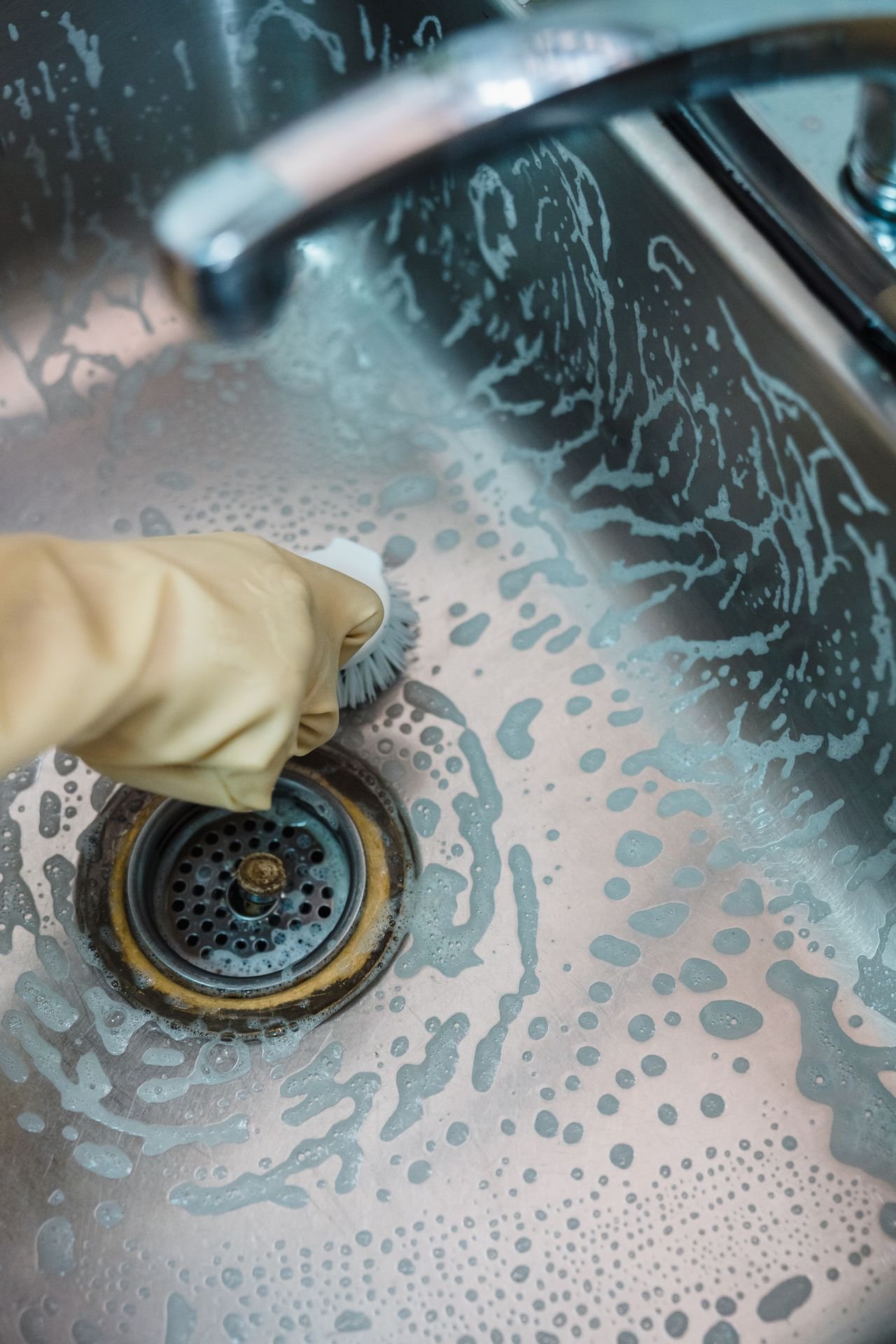
Drain cleaning for Overlook's bluff-above-Swan-Island housing stock — long clay-tile laterals, bellying on grade, root intrusion at Mocks Crest. 1900s-1930s bungalows and four-squares to Interstate-corridor apartment infill.
Live 24/7 dispatch. Stocked trucks. Most repairs first-visit complete.
No call-center runaround. Live answer, dispatch, on-site work, written quote, fix, permit.
Real dispatcher picks up — no voicemail, no IVR menu. We confirm your address in Overlook, triage the emergency, and stay on the line while we find the nearest available crew. If you need to shut your water off, we walk you through it.
We send the closest stocked truck to Overlook. ETA quoted before we hang up — usually 30-60 minutes. The route up I-5 or over the Broadway and Fremont bridges to N Interstate is direct from our SE dispatch.
On-site inspection — we don't quote sight-unseen. Written quote before any work starts. On bluff laterals, that includes a camera scope to locate where the clog is sitting before we commit to a cable run or hydro-jet approach.
Most repairs first-visit. Stocked trucks carry fittings for 1900s-1930s Craftsman bungalow and four-square stock plus modern PEX and ABS for Interstate-corridor units. Portland BDS permits pulled where required — we handle the paperwork and schedule the inspection.
Drain cleaning in Overlook covers everything from a slow kitchen sink to a main-line sewer backup surfacing at a basement floor drain. The difference between a branch clog and a blocked bluff lateral is not just the tool required — it is the diagnostic approach. A clog sitting 70 feet downhill under a mature street tree is invisible to a plunger and unreachable by a short cable. That is why our crews bring a camera scope on every main-line call in this neighborhood before recommending a repair scope.
Overlook sits on the bluff above Swan Island and the east shore of the Willamette, with streets near Mocks Crest and Overlook Park dropping sharply toward the river. That grade is the defining factor in how drains fail here. Homes set back from the curb or sitting on the downhill side often have sewer laterals running 60 to 100-plus feet of clay tile or early cast iron down toward the main — the longest single pipe on the property, and the one most likely to belly.
A belly is a low spot that forms when a long lateral loses its grade, usually where the soil has settled unevenly on a hillside. Water moves through a bellied section, but solids slow and accumulate. Cable machines clear the blockage temporarily; the belly refills within months. The correct diagnosis is a camera scope that locates the sag and determines whether a trenchless cured-in-place lining or a targeted spot dig will solve it permanently. Crews who run the bluff weekly know this pattern. A dispatcher reading a script from a warehouse in another state does not.
Based on actual dispatch patterns in this neighborhood and the surrounding North Portland bluff corridor.
Cable machines (Spartan, Ridgid K-7500, K-1500) for branch lines and main lines. Hydro jetter (4,000+ psi) for grease, mineral scale, and root cutting on long runs. Ridgid SeeSnake camera with locator for diagnosing pipe condition and pinpointing belly location before committing to a repair recommendation. No-hub couplings, transition fittings, and CIPP lining materials for same-visit or next-day trenchless repair on the bluff.
Licensed Oregon plumbers, fully insured with workers’ comp on every job.
General liability and workers' comp with property-damage coverage on every job. COI on file for landlords and Swan Island property managers.
Upfront pricing on-site before any work. If diagnosis reveals something different, we stop and re-quote.
Common parts, fittings, and camera scope on every truck. First-visit completion on the majority of calls.
Anonymized case study from a recent dispatch in this neighborhood.
Recent call on N Overlook Boulevard near Mocks Crest — a 1918 American four-square with recurring main-line backups every four to six months despite routine cabling by a prior service. Camera scope revealed a clay-tile lateral with a pronounced belly at 58 feet, past the edge of the property where the grade begins its steepest drop toward Swan Island. The belly was pooling solids; root intrusion at two joints on either side was adding to the restriction. We hydro-jetted the root mass, then scoped and measured for a cured-in-place lining from the cleanout to the main. The homeowner was referred to Portland BES for the lateral financial-assistance program; with income-qualification approval, the trenchless lining cost came in well below an open-trench alternative on a sloped yard. No recurring backups since.
We dispatch 24/7. Live dispatch around the clock. ETA 30-60 minutes.
(971) 293-4200 Request a Quote